Mostrar mensagens com a etiqueta Arthur C. Clarke. Mostrar todas as mensagens

sexta-feira, março 16, 2012

Arthur C. Clarke Predicts the iPad in 1968


In 1964, legendary science fiction writer, inventor, and futurist Arthur C. Clarkepredicted the future with astounding accuracy, presaging everything from telecommuting to the digital convergence. It turns out he predicted the future in even more granular detail in his 1968 novel-turned-Kubrick-classic2001 A Space Odyssey, where in Chapter 9 he describes the “newspad” — a strikingly prescient vision for the iPad.
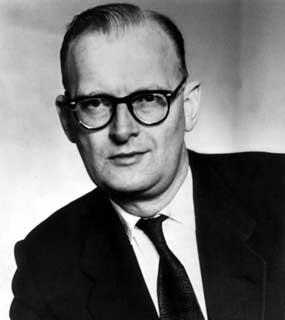
Arthur C. Clarke
"When [Floyd] had tired of official reports, memoranda and minutes, he would plug his foolscap-sized Newspad into the ship’s information circuit and scan the latest reports from Earth. One by one, he would conjure up the world’s major electronic papers. He knew the codes of the more important ones by heart and had no need to consult the list on the back of his pad. Switching to the display’s short-term memory, he would hold the front page while he searched the headlines and noted the items that interested him.
Each had its own two-digit reference. When he punched that, a postage-sized rectangle would expand till it neatly filled the screen and he could read it with comfort. When he finished he could flash back to the complete page and select a new subject for detailed examination.
Floyd sometimes wondered if the Newspad, and the fantastic technology behind it, was the last word in man’s quest for perfect communications. Here he was, far out in space, speeding away from Earth at thousands of miles an hour, yet in a few milliseconds he could see the headlines of any newspaper he pleased. (That very word “newspaper,” of course, was an anachronistic hangover into the age of electronics.) The text was updated automatically on every hour; even if one read only the English versions, one could spend an entire lifetime doing nothing but absorbing the ever-changing flow of information from the news satellites.”

The iPad was released in 2010, two years after Clarke’s death.
The past, of course, has a long history of envisioning the future and presaging its inventions — which is to be expected in a culture of combinatorial creativitywhere ideas build upon other ideas. As neuroscientist David Eagleman reminds us in the excellent Incognito: The Secret Lives of the Brain, one of the 11 best psychology books of 2011:
"When an idea is served up from behind the scenes, your neural circuitry has been working on it for hours or days or years, consolidating information and trying out new combinations.” 

What is true of a single human brain is no doubt true of humanity’s networked collective conscience.

domingo, janeiro 03, 2010

2010: The Year We Make Contact

O Ano de mais um dos excelentes livros de Arthur C. Clarke


Não só pela historia mas também pelos efeitos utilizados no filme, que estavam disponíveis a época, tornam deste mais um dos grandes filmes de sempre.

Vamos a ver o que nos espera o ano do contacto...

quarta-feira, março 19, 2008

Sir Arthur C. Clarke - 1917/12/16 a 2008/03/19

Arthur C. Clarke foi um cientista, investigar, astrónomo, amante da fotografia e um grande escritor de ficção cientifica. Ficara para sempre ligado a 7ª arte com a passagem de duas das suas obras para o grande ecrã, "2001 - uma odisseia no espaço" e "2010 - o ano do contacto". Filmes que foram um marco nos filmes de ficção cientifica.

Foi em Outubro de 1945, quando tinha apenas 28 anos, que numa revista de electrónica amadora (Wireless World) avançou com uma das maiores ideias das ciências espaciais: o satélite geoestacionário. O artigo intitulado "Can Rocket Stations Give Worldwide Radio Coverage", especulava sobre a possibilidade de uma rede de satélites fornecer uma cobertura radiofónica à escala mundial. Um satélite geoestacionário devia situar-se numa órbita especial, a chamada órbita de Clarke. Essa órbita, a cerca de 36 000 km de altitude, está hoje povoada de satélites, não só de comunicações como de meteorologia.

Porquê 36 000 km ? é só fazer as contas, usando a segunda lei de Newton e a força de gravitação universal. Aprende-se na Física do 10º ano que um satélite a essa altitude, colocado sobre o equador, demora exactamente um dia a dar a volta a Terra. Como a Terra dá uma volta completa nesse tempo, o satélite é visto do equador da Terra como estando permanentemente parado. Em 1945 não se sabia que a tecnologia dos satélites só se viria a concretizaria com o primeiro Sputnik, em 1957 (fez agora 50 anos). O Sputnik 1 girava a uma órbita a menos de 1000 km e o primeiro satélite geoestacionário, o Syncom 2, só foi lançado pelos americanos em 1963. O artigo de Clarke não era, portanto, ficção: era científico.

Hoje há ideias que parecem tão lunáticas como a órbita de Clarke parecia no fim da guerra. Uma das mais curiosas consiste é a construção de um elevador espacial, isto é, um fio estendido na vertical até à órbita de Clarke e que se mantenha esticado, a rodar com a Terra pelo facto de a ponta estar em condições geoestacionárias. A ciência começa com a ficção, depois torna-se a realidade.

No seu ultimo aniversario tinha feito 3 pedidos :
- que o ET lhe telefonasse
- que o mundo terminasse com a dependência do petróleo
- que a paz reinasse no SiriLanka

Que pelo menos um dos desejos se realize.


Modalidades - 2026/06/20

Sábado, 2026/06/20  - 15:00 - Hóquei Em Patins - SL Benfica -v- Sporting Cp - Campeonato Nacional | 25/26 - Playoff Final Jornada 3  - 20:0...